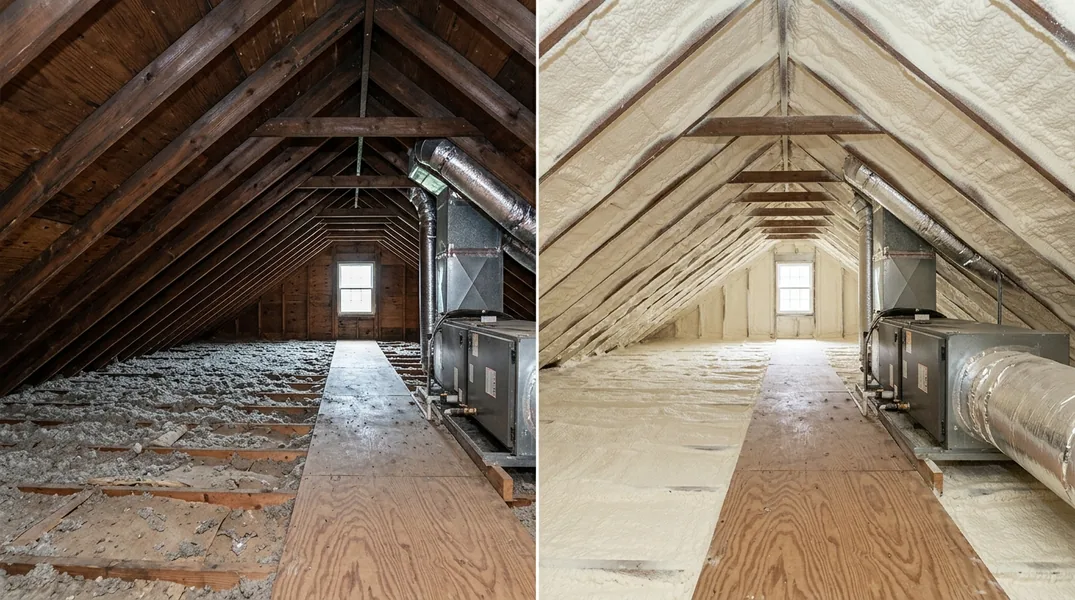
Understanding Ardmore Bungalows and Tobacco-Era Mill Houses
Ardmore bungalows and the tobacco-era mill houses scattered throughout Winston-Salem represent a unique architectural heritage. Built between the 1890s and 1940s, these homes showcase craftsmanship and character that modern construction often lacks. However, their charming exteriors and solid brick construction mask a significant challenge for today's homeowners: inadequate insulation and difficult-to-reach wall cavities.
The typical Ardmore bungalow features thin exterior walls, often just 4 to 6 inches thick, supported by brick piers rather than a traditional concrete foundation. This construction method was economical and practical for the era, but it created narrow wall cavities that are nearly impossible to insulate using conventional fiberglass batts or blown-in cellulose. Mill houses built during the tobacco boom era face similar challenges, with thin brick veneer walls and limited cavity space. Homeowners in these older properties often struggle with drafts, inconsistent temperatures, and higher energy bills because the original insulation (if any remains) has settled, deteriorated, or was never installed properly.
Why Traditional Insulation Fails in Thin-Wall Homes
Conventional insulation methods simply do not work well in Ardmore bungalows and mill houses. Fiberglass batts require cavities at least 3.5 inches deep to achieve their rated R-value, and they can shift over time, leaving gaps and cold spots. Blown-in cellulose and fiberglass can settle unevenly in thin cavities, creating voids that compromise thermal performance. Even worse, accessing these narrow wall spaces from the interior often means removing plaster, damaging original woodwork, or cutting large holes that are difficult to repair without professional restoration work.
The brick pier foundation system adds another layer of complexity. Air infiltrates freely through the gaps between piers and around the sill plate, creating a constant flow of unconditioned air into the crawl space and up into the living areas above. Standard crawl space spray foam solutions can address the pier cavities, but only if the application is done correctly and with materials suited to the moisture and temperature fluctuations of an older home's foundation system.
Injection Foam Insulation: The Solution for Thin Walls
Wall & Injection Foam Insulation is the ideal solution for Ardmore bungalows and tobacco-era mill houses. Unlike batts or blown-in materials, injection foam expands to fill every cavity completely, conforming to the exact dimensions of your thin walls. A small access hole (typically 1 to 1.5 inches) is drilled into the wall cavity, and low-pressure foam is injected to expand and cure, creating a continuous thermal barrier with no gaps or settling.
The beauty of injection foam is that it minimizes disruption to your home's historic character. Holes can be drilled from the exterior (between brick courses or under siding) or the interior (in inconspicuous locations), and they are easily patched afterward. The foam bonds to the wall studs, sheathing, and any old insulation present, creating a monolithic thermal envelope. For thin 4 to 6-inch cavities, Open Cell Spray Foam Insulation is often preferred because it expands to fill the space without excessive pressure that could bow or crack old plaster or brick.
Addressing Old Insulation Removal and Crawl Space Concerns
Many Ardmore bungalows contain decades-old insulation that has become ineffective or even hazardous. Fiberglass batts installed in the 1950s and 1960s may contain formaldehyde binders that off-gas over time. Cellulose insulation can settle to just a few inches of depth, leaving most of the cavity empty. Before injection foam can be applied, Winston-Salem homeowners often need professional old insulation removal to ensure the new foam bonds properly and achieves full coverage.
The crawl space beneath your Ardmore bungalow or mill house is equally important. Exposed brick piers, wooden sill plates, and rim joists are constant sources of air leakage and heat loss. Crawl space spray foam applied to the rim joist, band board, and the cavities between piers creates a thermal break that prevents cold air from entering the living spaces above. When combined with proper wall insulation, a sealed and insulated crawl space can reduce heating and cooling costs by 15 to 25 percent in older homes.
The Spray Foam Application Process for Historic Homes
The application of spray foam insulation in historic Ardmore bungalows and mill houses requires skill, experience, and respect for the home's original construction. A qualified contractor will first conduct a thorough inspection to identify all wall cavities, assess the condition of existing insulation and framing, and determine the best access points for drilling and injection. For homes with plaster walls, care must be taken to avoid damaging ornamental details, crown molding, or original wainscoting.
The injection process itself is straightforward but must be done with precision. Low-pressure injection equipment delivers the foam in controlled volumes, allowing it to expand and fill the cavity without creating excessive back-pressure. The contractor will inject at multiple points along the height of the wall to ensure complete coverage. After the foam cures (typically 24 hours), the access holes are patched with matching materials. For exterior holes, caulk or siding repair may be necessary. Interior holes can be patched with plaster or drywall, then finished to match the existing wall.
Spray Foam Insulation Cost in Winston-Salem: What to Budget
The pricing for injection foam insulation and crawl space work on historic homes depends on several factors: the total square footage of walls to be insulated, the depth and condition of existing insulation, the accessibility of cavities, and whether old insulation removal is required. Ardmore bungalows typically range from 1,200 to 2,200 square feet, and the cost for wall insulation alone can range from $3,000 to $8,000 depending on the scope of work. Crawl space treatment adds another $2,000 to $5,000 for a typical home.
While these numbers may seem significant, the return on investment is substantial. Homeowners report energy savings of 20 to 30 percent on heating and cooling costs after completing a comprehensive insulation upgrade. Over a decade, those savings can total $15,000 or more, depending on local utility rates and climate. Additionally, improved insulation increases comfort year-round, reduces drafts and cold spots, and helps protect your home's historic structure from moisture damage and thermal stress. To understand the specific free estimate for your Ardmore bungalow or mill house, contact Winston-Salem Spray Foam Insulation at (336) 608-5235 for a detailed assessment.
Choosing the Right Contractor for Historic Home Insulation
Not all spray foam contractors have experience working on historic homes like Ardmore bungalows. You need a team that understands the unique structural challenges of thin walls, brick piers, and original construction methods. A qualified contractor will ask detailed questions about your home's age, construction type, existing insulation, and any previous renovations. They should be willing to inspect the home in person and provide a detailed written estimate that breaks down labor, materials, and the scope of work.
Winston-Salem Spray Foam Insulation specializes in older homes throughout the region, including Kernersville, Lewisville, and surrounding communities. Our team has successfully completed dozens of injection foam and crawl space projects on historic properties, and we understand how to preserve your home's character while dramatically improving its energy efficiency. When you call (336) 608-5235 or request a free estimate, you're working with contractors who respect the heritage of your home and deliver results that last for decades.
Looking for a professional spray foam insulation contractor in Winston-Salem? Winston-Salem Spray Foam Insulation responds fast for all your spray foam insulation needs.
Get a Free Quote